Chord Finder
Interactive Chord Finder to explore and learn chords. Perfect for quick chord identification and deepening your understanding of chord variations.
notes
What are Chords?
Chords are a fundamental building block of music, consisting of multiple notes played simultaneously. They create harmony and form the foundation for many songs. Understanding chords is key to developing your musical skills, whether you're a beginner or an advanced musician.Why Learn Chords?
Learning chords allows musicians to build and play songs more easily, understand music theory better, and improvise or compose music on the fly. Chords are used in nearly every genre of music, from classical to jazz, pop, and rock. By knowing the different types of chords (such as major, minor, augmented, diminished), you expand your ability to play and understand a wide variety of music styles.Types of Chords
There are many different types of chords, each with its own unique sound and feel. Common types include:- Major Chords:Bright, happy-sounding chords.
- Minor Chords:Often darker or more melancholic in tone.
- Augmented & Diminished Chords:These have more tense or unstable sounds, often used for transition or emotional intensity.
- Seventh Chords & Extended Chords (9th, 11th, 13th):These add more complexity and texture, common in jazz and blues music.
How to use the Chord Finder
C
Cm
Guides to the chord families
Every chord here has its own page with the notes spelled out, the shape drawn on a keyboard, playback and inversions. If you want to know what a whole family of chords is doing rather than one shape, start with these:
- What Is a Chord? How triads and 7ths are built, major against minor, and how to read any chord name.
- 7th Chords: Maj7, m7 and Dominant 7 A triad plus one note, and that note decides whether it sounds warm, sad or unresolved.
- Sus Chords: Sus2 and Sus4 What happens when the third is swapped for a 2nd or a 4th, and how each one resolves.
- Add9 Chords Keep the third, stack the 9th on top, and hear why Cadd9 turns up everywhere.
- How to Identify Chords by Ear Working the other way round: bass note first, then major or minor, then listen for a fourth note.
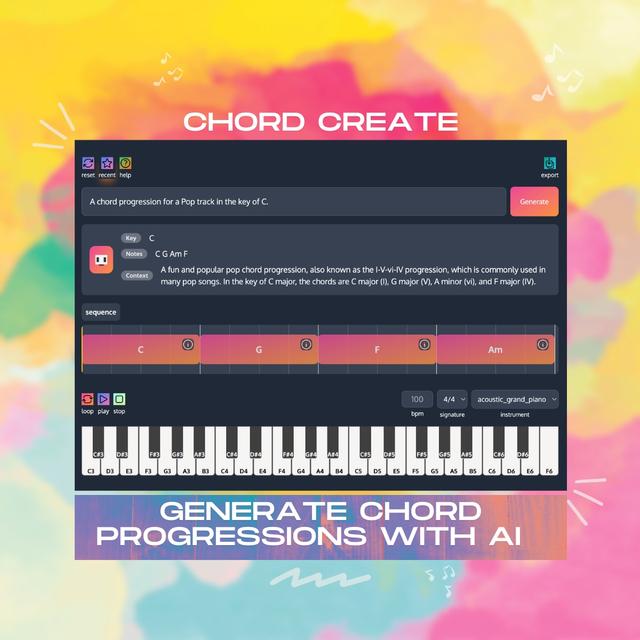
To hear a run of chords rather than one at a time, the chord progression generator writes a progression from a description and plays it back.
More tools
Explore more tools to improve your music skills.