FeaturedTools
Guitar Chord Progression Generator: Chords You Can Actually Play
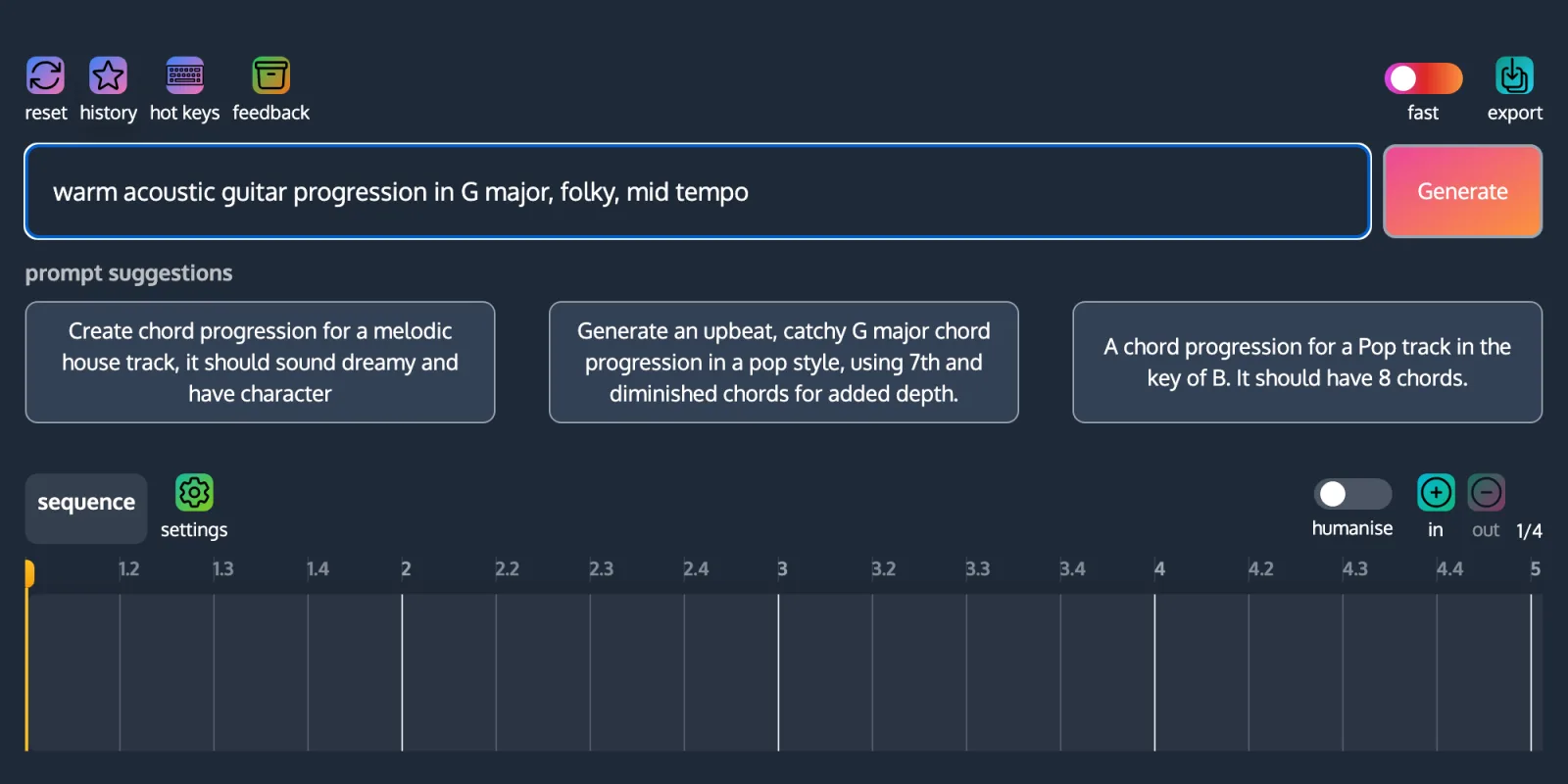
How a guitarist uses an AI chord progression generator: get progressions in guitar-friendly keys, turn the chord names into shapes, and export MIDI.
Practical writing about chords for people who actually write music: what a chord progression is doing, why one sounds sad and another sounds hopeful, and how to get the result into a DAW. Every post is written against ChordCreate's own tools, so the chords and progressions on the page are ones you can hear rather than just read.
FeaturedTools
How a guitarist uses an AI chord progression generator: get progressions in guitar-friendly keys, turn the chord names into shapes, and export MIDI.
Eight chord progression generators compared: browser tools and DAW plugins, how each one generates, MIDI export, and prices checked September 2026.
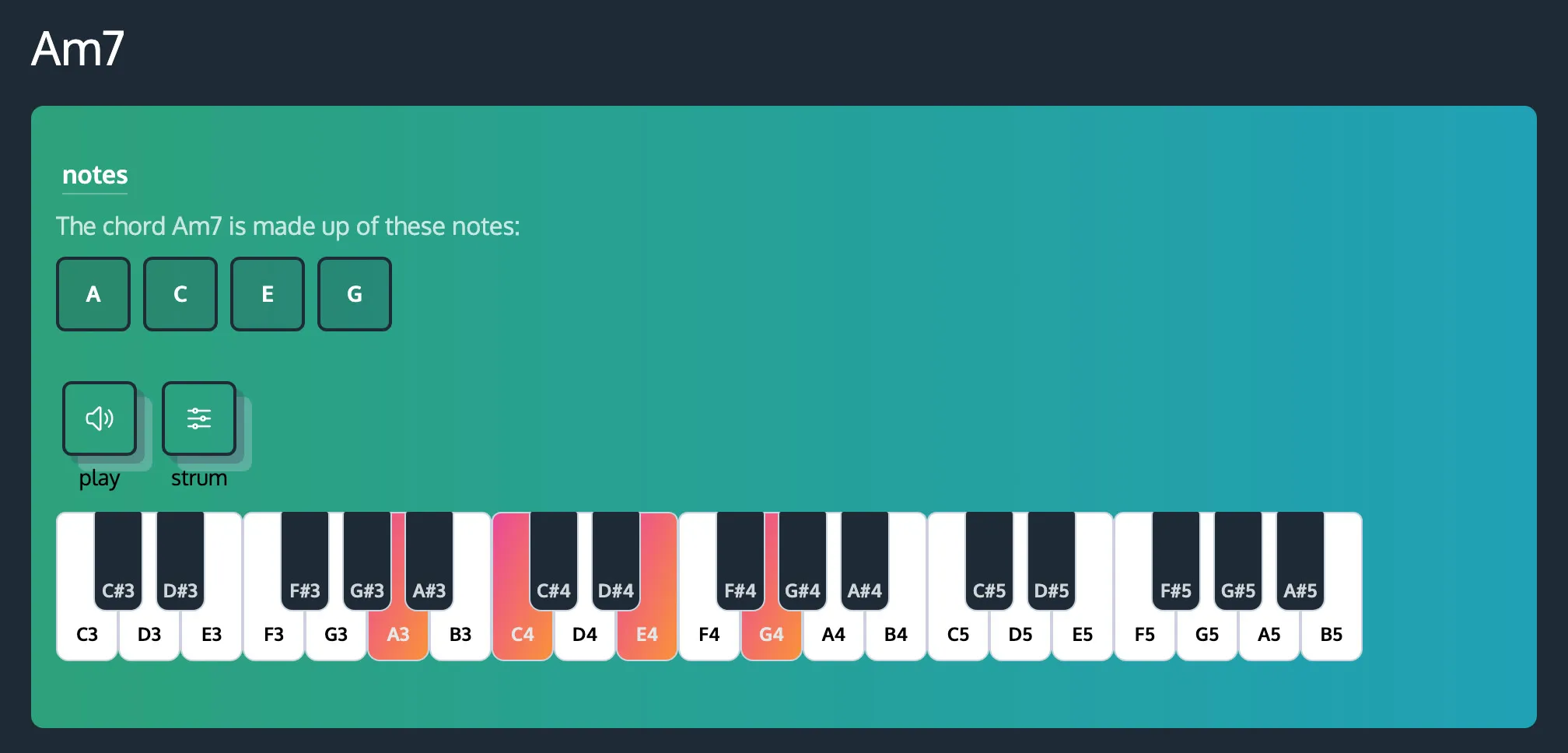
A 7th chord is a triad plus one note, and that note decides everything. Hear maj7, m7 and dominant 7 side by side, and get all three in every key.
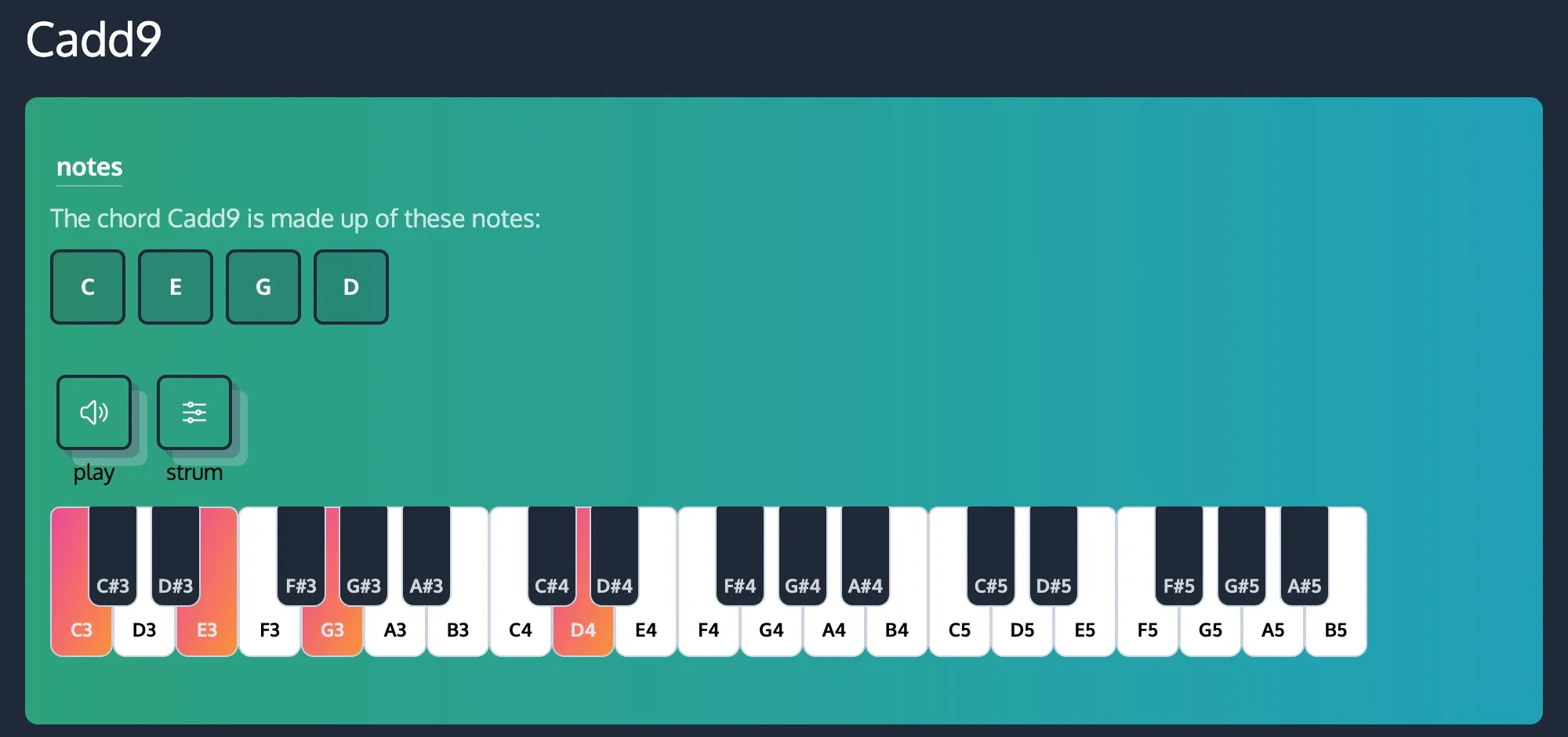
An add9 chord keeps its third and stacks the 9th on top. Hear what add9 and madd9 do, why Cadd9 is everywhere, and get add9 in all twelve keys.
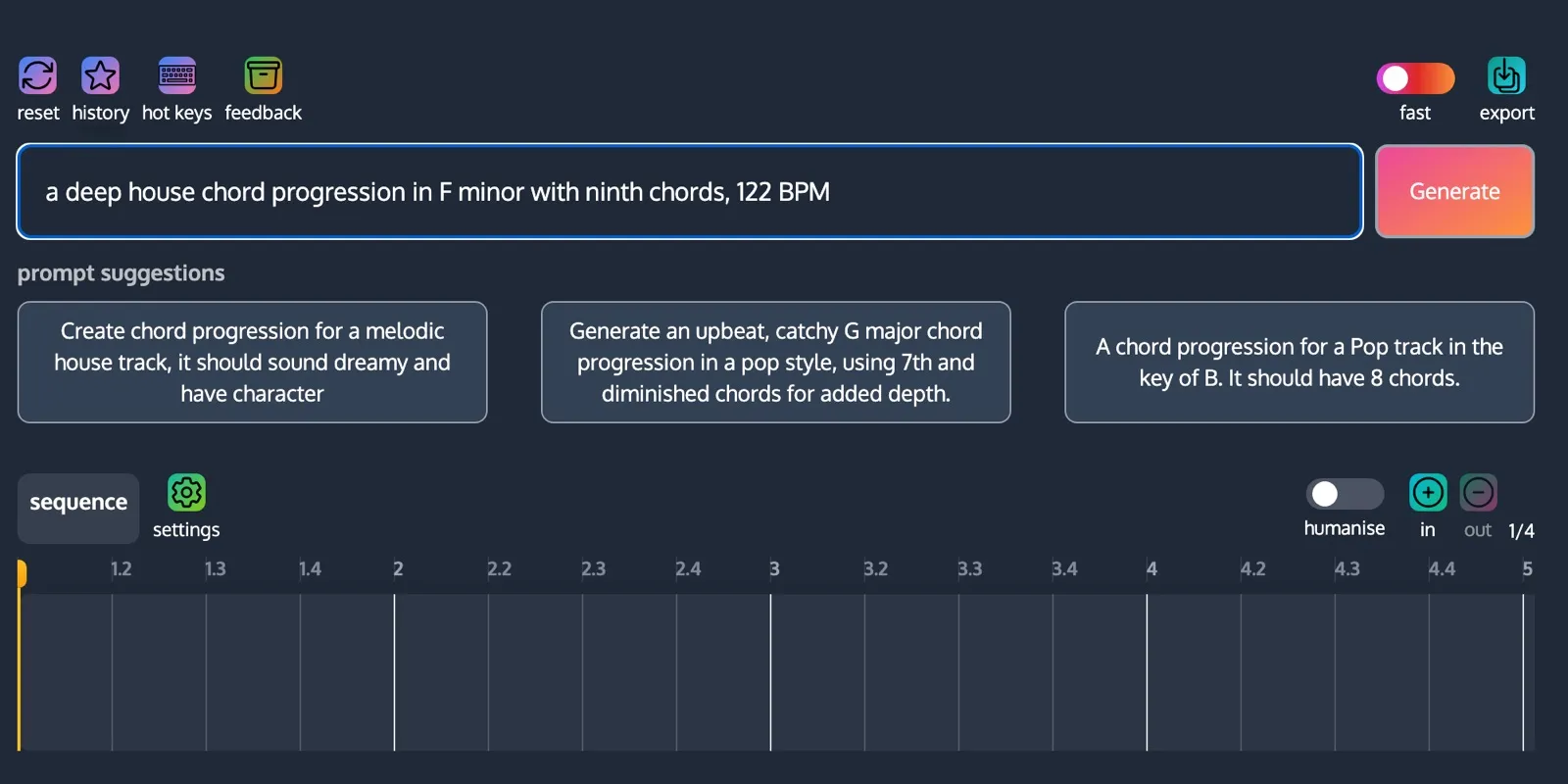
Ten house chord progressions for deep, piano, melodic and Afro house, all playable in your browser, plus the 7th and 9th chords house is built on.
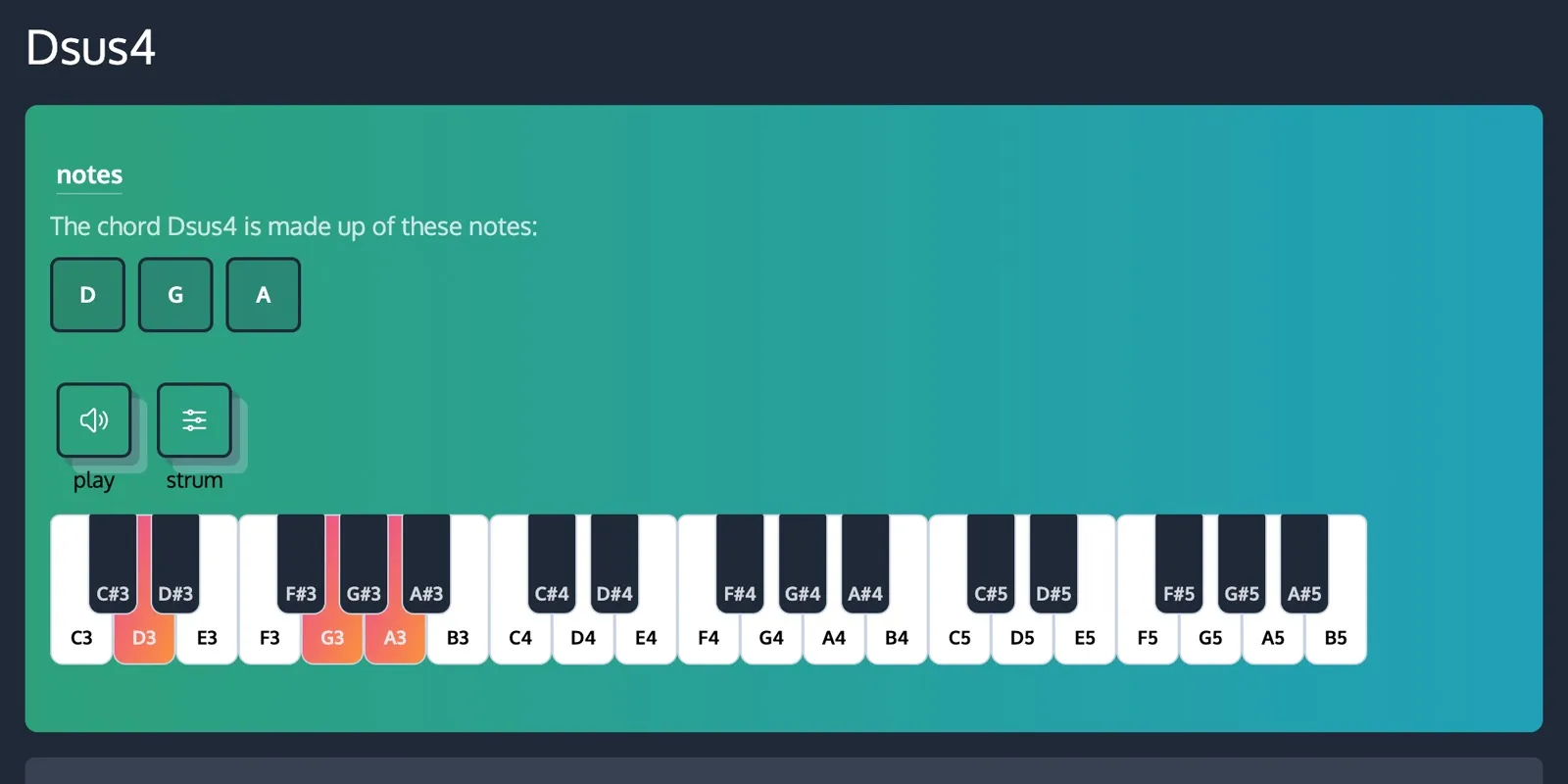
Sus chords swap the third for a 2nd or 4th. Hear what sus2 and sus4 each do, how they resolve, and get the sus chords in all twelve keys.
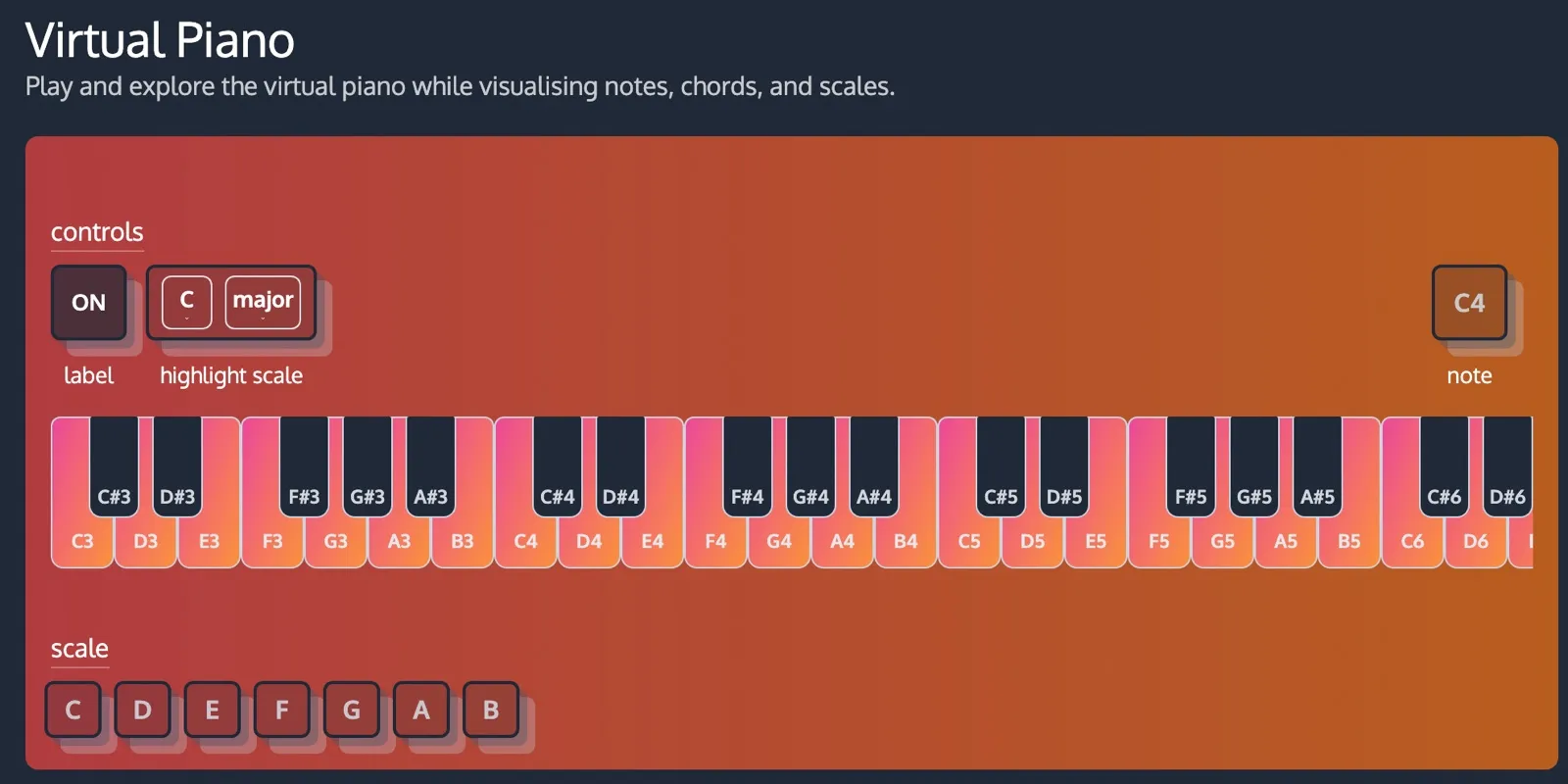
How to play piano chords online: build each shape on a virtual keyboard, highlight a scale to see which chords fit, and hear the whole chord.
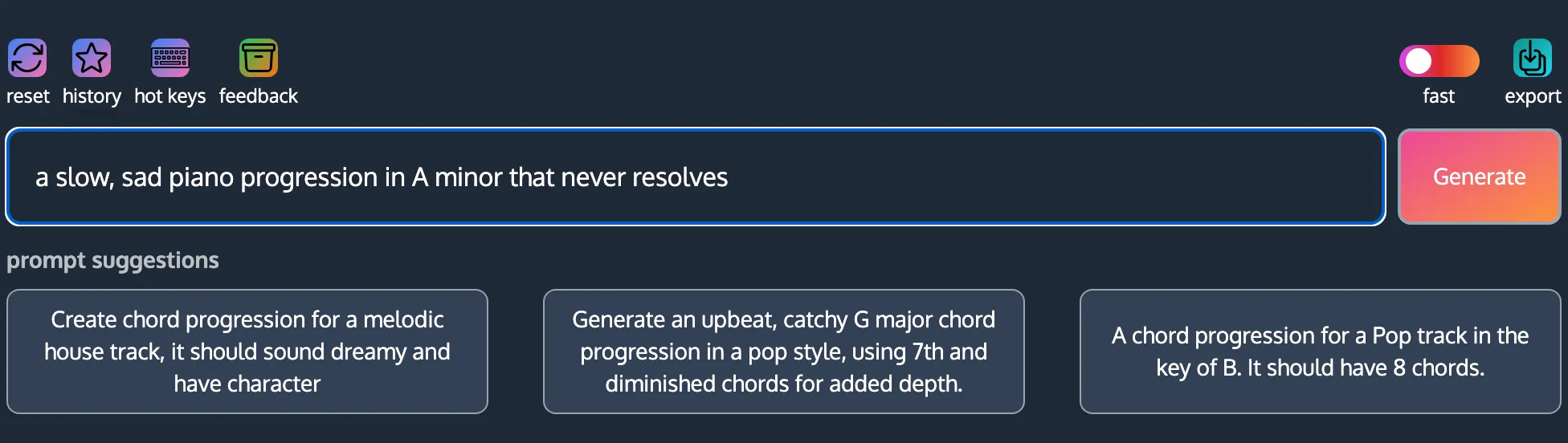
Twelve sad chord progressions grouped by the kind of sad they create, each one playable in your browser, plus the theory behind why they work.
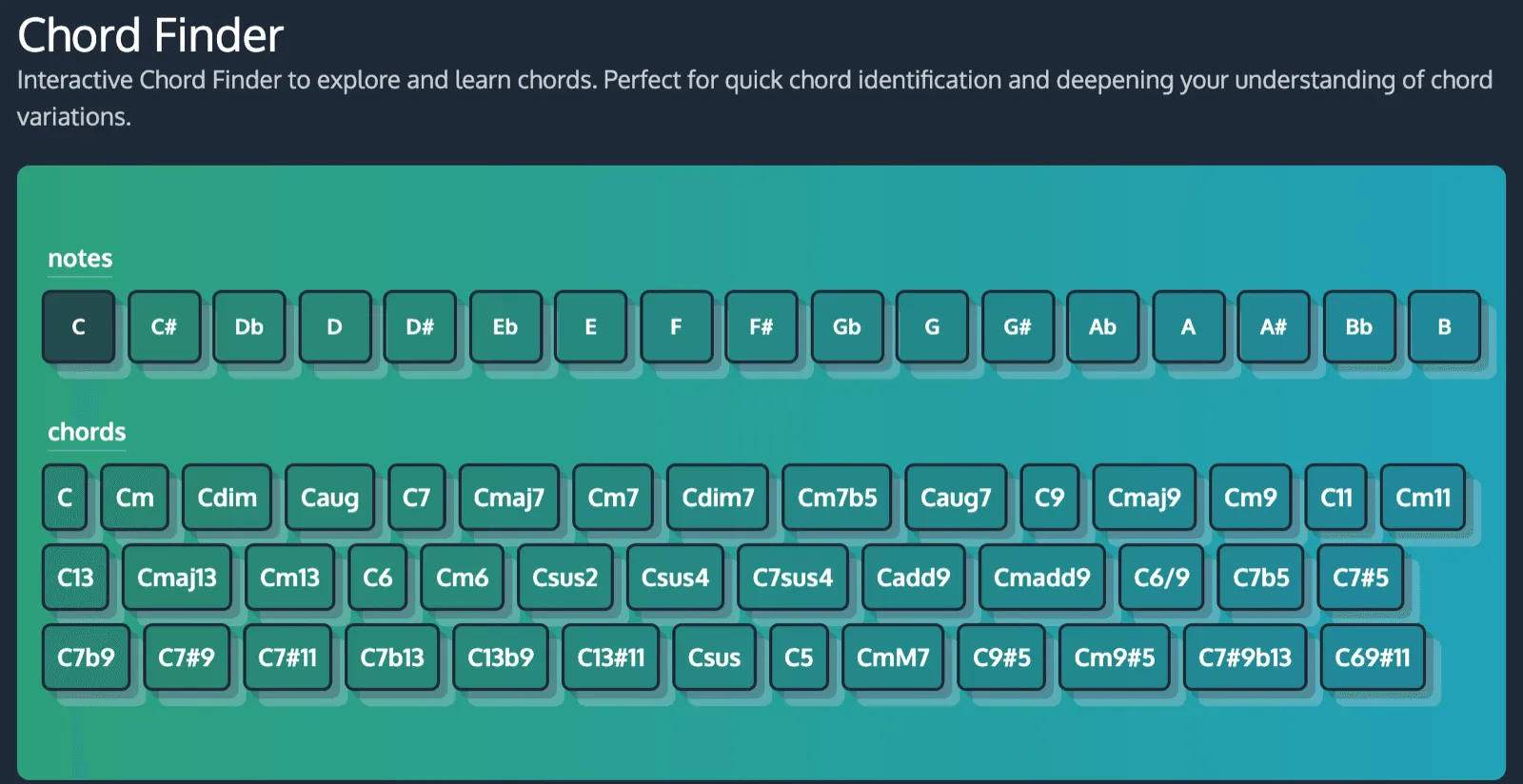
Three different tools all call themselves a chord finder. Here is which one you actually need, and how to look up any chord and hear it played.
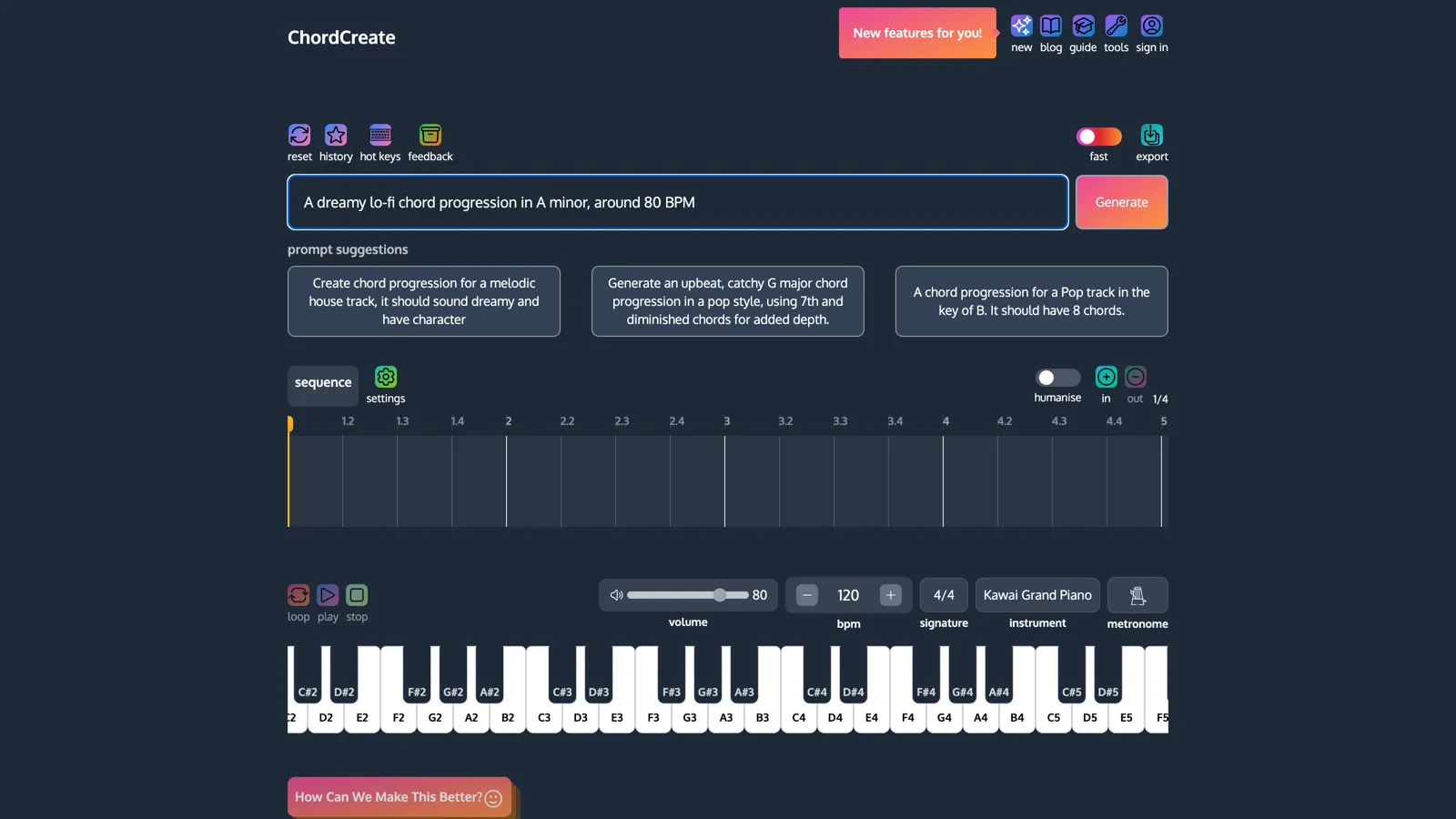
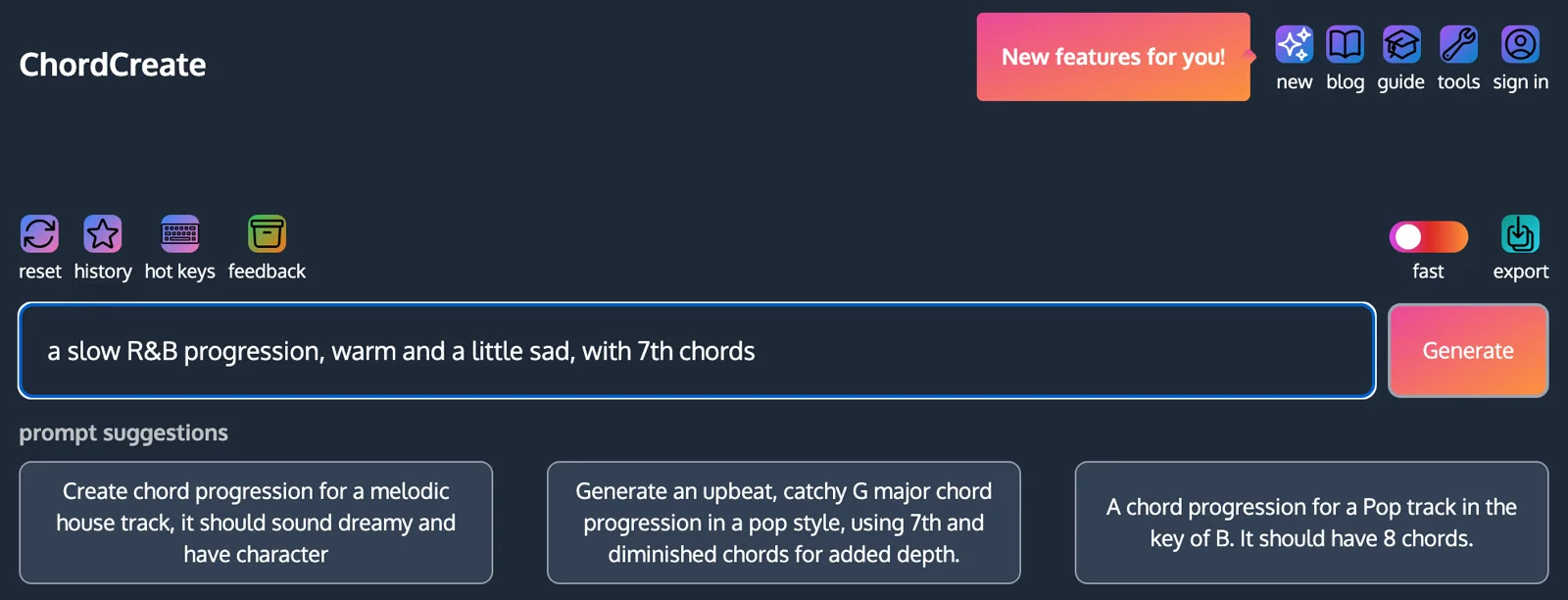
Turn a plain-language idea into real chords. Learn to write prompts by key, genre, mood and tempo, then hear, edit and export the progression.
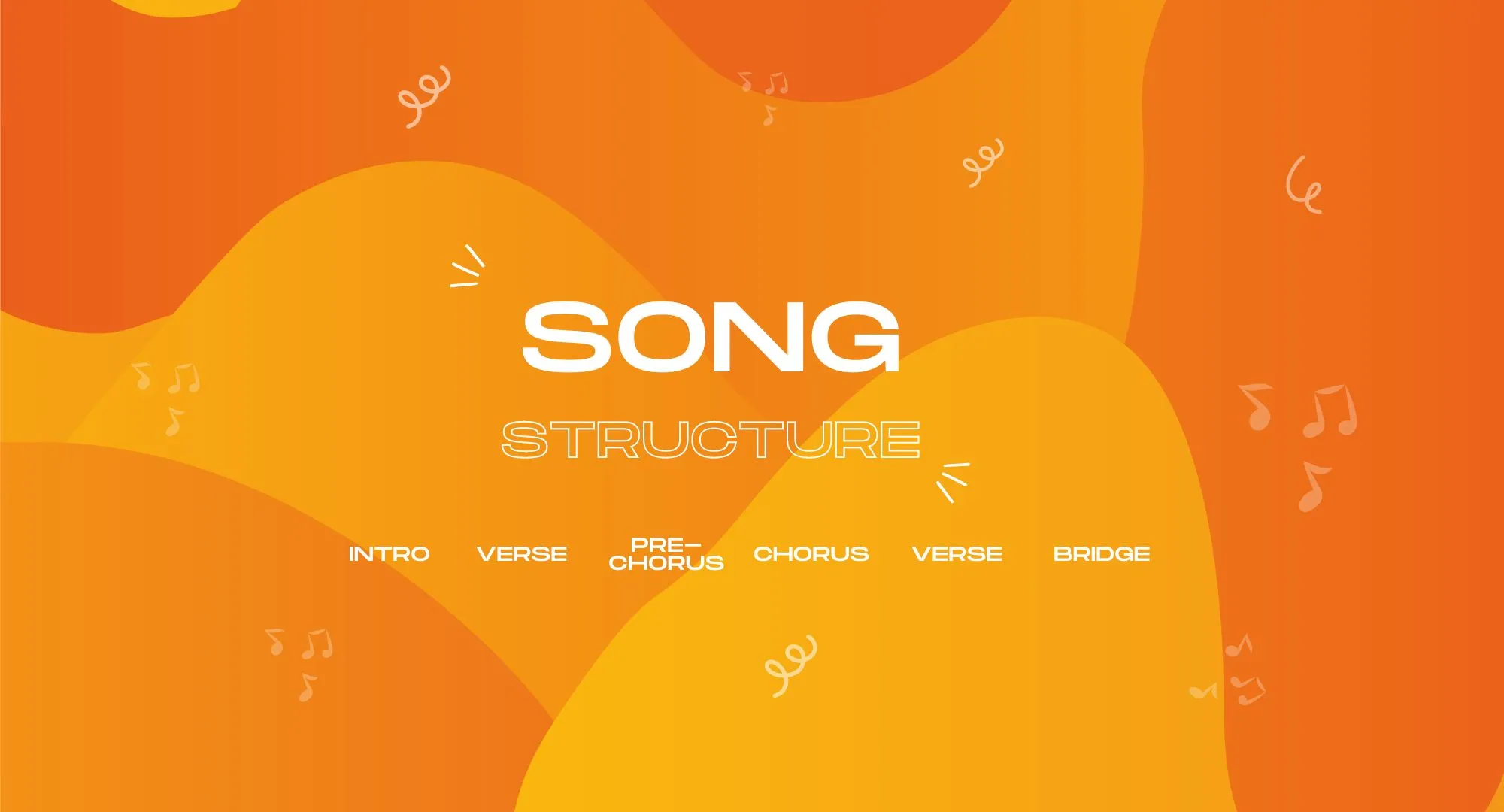
Discover the building blocks of great songs. Explore intros, verses, choruses, bridges, and outros to create compositions that resonate with your audience.
Six progressions that have worked for decades, plus what the bVII and bVI chords actually do, with the chords written out and a player for each.
Identify chords by ear with a repeatable five-step test: find the bass note, decide major or minor, then listen for a fourth note. Hear every step.
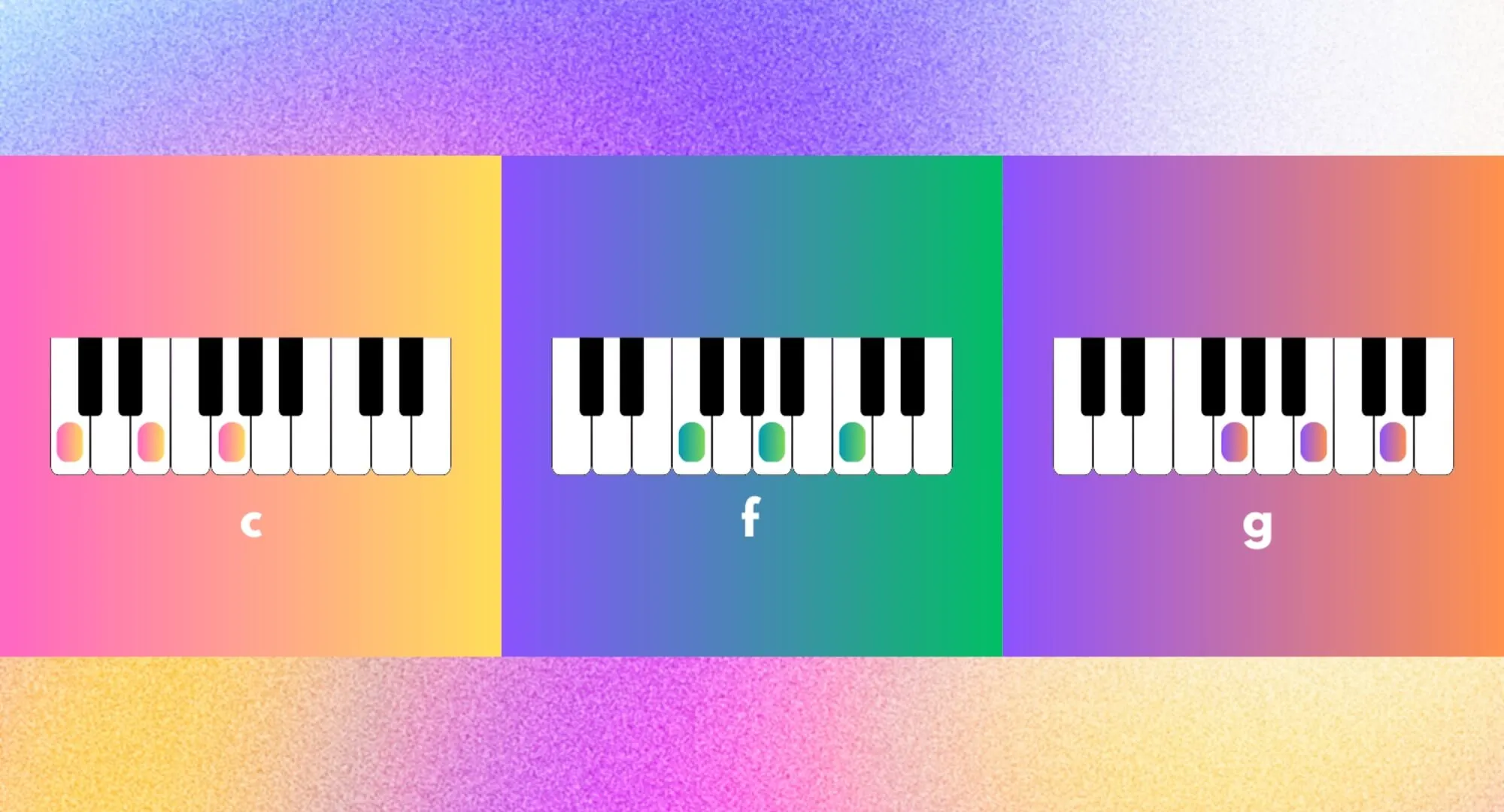
Discover the foundation of most music, Roman numeral representation, and how to create emotion with chord combinations.
A chord is two or more notes played together. Hear how triads, 7ths and major vs minor are built, and learn to read any chord name.